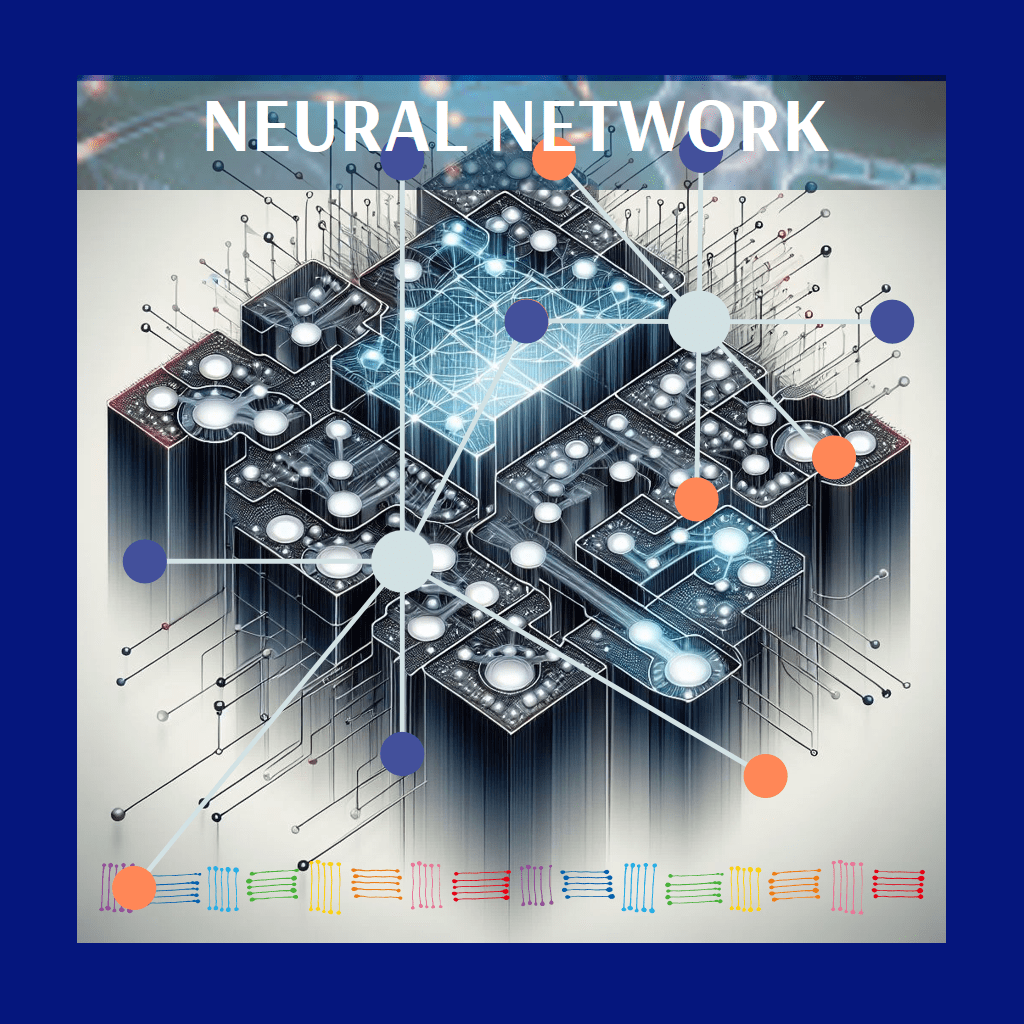
Neural networks have emerged as a cornerstone of artificial intelligence, enabling machines to learn complex patterns and make intelligent decisions.Neural networks are intricately designed systems that mimic the workings of the human brain. Lets understand everything from basic components to advanced techniques.
The Neural Network Architecture
At its essence, a neural network comprises layers of interconnected neurons, each layer contributing to the network’s ability to process data and make predictions. Understanding the architecture of a neural network is crucial for grasping its inner workings:
Input Layer
The input layer receives raw data and passes it to the subsequent layers for processing. Each neuron in the input layer represents a feature of the input data, such as pixels in an image or words in a sentence.
Hidden Layers
Hidden layers, nestled between the input and output layers, perform the bulk of the computation in a neural network. These layers apply transformations to the input data, extracting meaningful patterns and features that aid in making accurate predictions.
Output Layer
The output layer produces the final predictions or outputs based on the processed data from the hidden layers. The number of neurons in the output layer corresponds to the number of distinct classes or categories in a classification task.
Let’s break down the architecture with an example:
Example: Image Classification
Consider a neural network tasked with classifying images of handwritten digits. The input layer of the network receives pixel values of the image, with each neuron representing a pixel. Hidden layers extract features like edges and textures, while the output layer predicts the digit class (0-9).
Neural Network: Fundamental Operations
Several fundamental operations drive the functionality of neural networks, enabling them to learn from data and improve performance over time:
Forward Propagation
Forward propagation is the process by which data flows through the network, from the input layer to the output layer. During forward propagation, each neuron receives input, applies a transformation (usually through an activation function), and passes the result to the next layer.
Backpropagation
Backpropagation, an essential component of neural network training, involves adjusting the network’s weights to minimize prediction errors. This process begins with a forward pass to make predictions, followed by the calculation of prediction errors and the subsequent adjustment of weights through the backward pass.
Gradient Descent Algorithm
Gradient descent is the optimization algorithm used to update the network’s weights during backpropagation. By iteratively adjusting weights in the direction that minimizes the loss function, gradient descent helps the network converge towards an optimal solution.
Weight Initialization
Proper initialization of network weights is crucial for effective training and preventing issues such as vanishing or exploding gradients. Techniques such as Xavier initialization and He initialization help set initial weights to appropriate values, facilitating smoother convergence during training.
Let’s illustrate these operations with an example:
Example: Predicting House Prices
Suppose we have a dataset of house prices based on features like area, number of bedrooms, and location. During forward propagation, the network processes the input features, applies transformations through hidden layers, and predicts the house price. Backpropagation then adjusts the weights based on prediction errors to improve accuracy.
Example: Training a Sentiment Analysis Model
Imagine training a neural network to perform sentiment analysis on movie reviews. Gradient descent adjusts weights based on errors between predicted and actual sentiments, gradually improving the model’s accuracy. Proper weight initialization sets initial values conducive to efficient learning.
Neural Network: Advanced Techniques
In addition to fundamental operations, several advanced techniques enhance the capabilities of neural networks and enable them to tackle complex tasks:
Regularization
Regularization techniques such as L1 and L2 regularization help prevent overfitting by imposing constraints on the network’s weights. By penalizing large weight values, regularization encourages the network to learn simpler and more generalizable patterns from the data.
Dropout
Dropout is a regularization technique that randomly deactivates a fraction of neurons during training, preventing co-adaptation and promoting robustness in the network. By introducing noise and redundancy, dropout helps prevent overfitting and improves generalization performance.
Batch Normalization
Batch normalization is a technique used to stabilize and accelerate the training of neural networks by normalizing the activations of each layer. By reducing internal covariate shift and enabling higher learning rates, batch normalization facilitates faster convergence and better performance.
Let’s explore these concepts with an example:
Example: Recognizing Handwritten Characters
In a neural network tasked with recognizing handwritten characters, regularization penalizes large weights to prevent overfitting, ensuring the model generalizes well to unseen data. Dropout randomly deactivates neurons during training, promoting resilience and preventing reliance on specific features. Batch normalization stabilizes training by normalizing layer activations, facilitating faster convergence and improved performance.
Conclusion
Neural networks represent a powerful paradigm for machine learning and artificial intelligence, with applications spanning diverse domains such as image recognition, natural language processing, and autonomous driving. By understanding the fundamental principles and advanced techniques of neural networks, you’ll be equipped to tackle complex problems and unlock the full potential of this transformative technology.

 PURPLEOCHRE AI